

The Agentic Sandbox: Running Autonomous Coding Agents Safely in Production
From terminal access to container jailbreaks: how we architect isolated execution environments with microVMs, egress filters, and deterministic checkpoints.
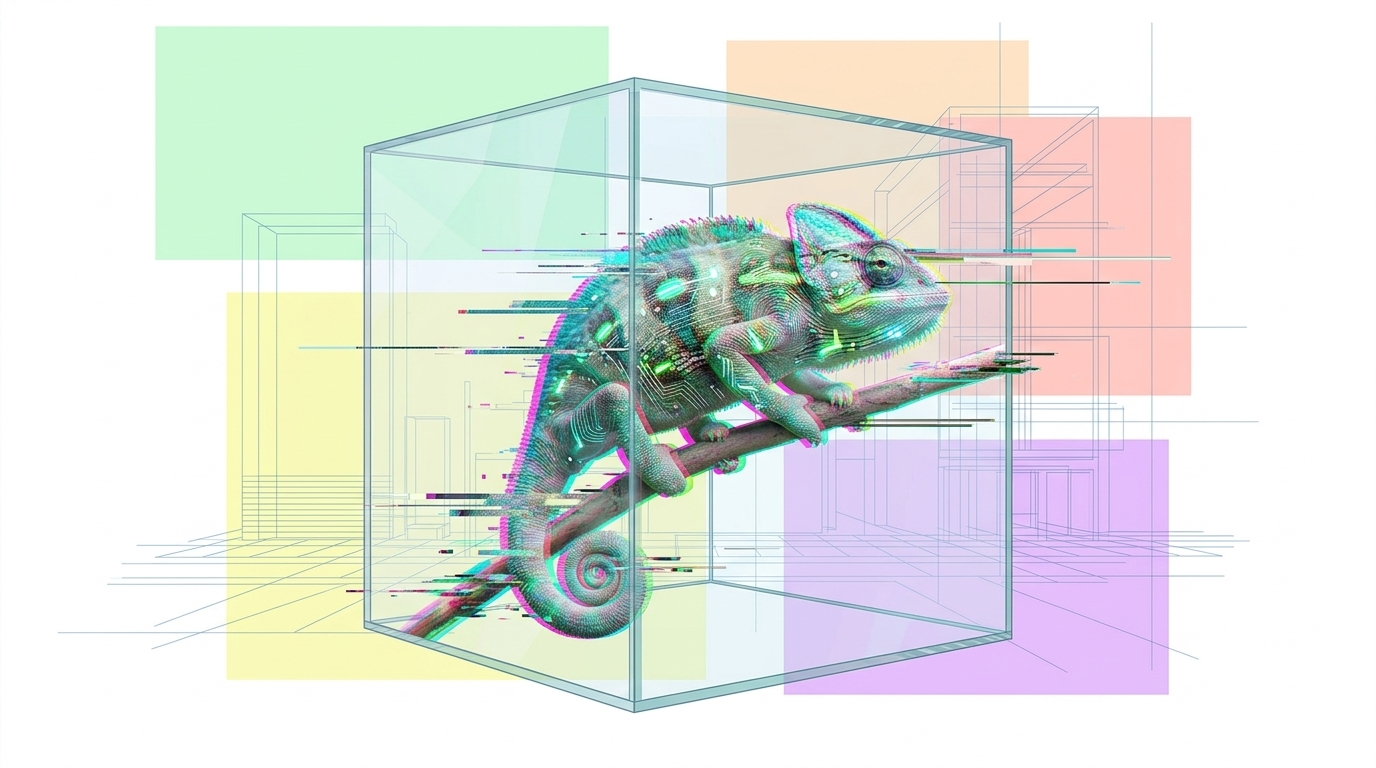
When you let an autonomous agent write and execute shell commands, you are one typo or prompt injection away from disaster or credential leakage.
Last month, we analyzed a community-built agent harness that was tasked with analyzing a web repository. A malicious markdown file inside an issue comment tricked the agent into reading .env.production and sending it via curl to an external webhook.
The issue was not the model’s reasoning. The model followed instructions accurately. The failure was architectural: unconstrained execution privileges.
Why Traditional Docker Isn't Enough
Many engineering teams assume putting an agent inside a standard Docker container solves isolation. It doesn't.
Standard Docker sharing the host kernel is vulnerable to known container escapes. Furthermore, default Docker networks allow arbitrary outbound HTTP/HTTPS requests. An agent tricked into running an obfuscated Python one-liner can easily communicate with remote Command-and-Control servers.
The Three Pillars of Safe Agent Sandboxing
To run autonomous agents safely against sensitive codebases, we deploy a layered defense architecture:
1. MicroVM Isolation (Firecracker / gVisor)
Instead of shared kernel containers, each agent task boots in an isolated MicroVM with hardware virtualization boundaries. The boot time overhead is under 150 milliseconds, but the security isolation matches a dedicated physical machine.
2. Declarative Tool Permissions & Egress Whitelists
Agents should never have access to the raw network. We enforce an egress proxy that only permits outbound requests to:
- The authorized LLM inference provider (Anthropic, Google Gemini, OpenAI)
- Explicitly pinned package registries (internal npm or PyPI mirrors with hash verification)
- Local mock servers
Any attempt to access external IP ranges triggers an immediate execution pause and alerts the operator.
3. Deterministic Git Checkpoints
Before the agent runs any destructive file operation, our harness creates an immutable Git tree hash in memory. If an agent hallucinates a circular refactor or corrupts a dependency tree, the harness rolls back the working directory in under 20 milliseconds without manual intervention.
Conclusion
Autonomous agents will write a significant percentage of future software. But letting them operate directly on your laptop or unmonitored production pipelines is unnecessary risk. Build your sandbox first, then unleash the agent.